Introduction
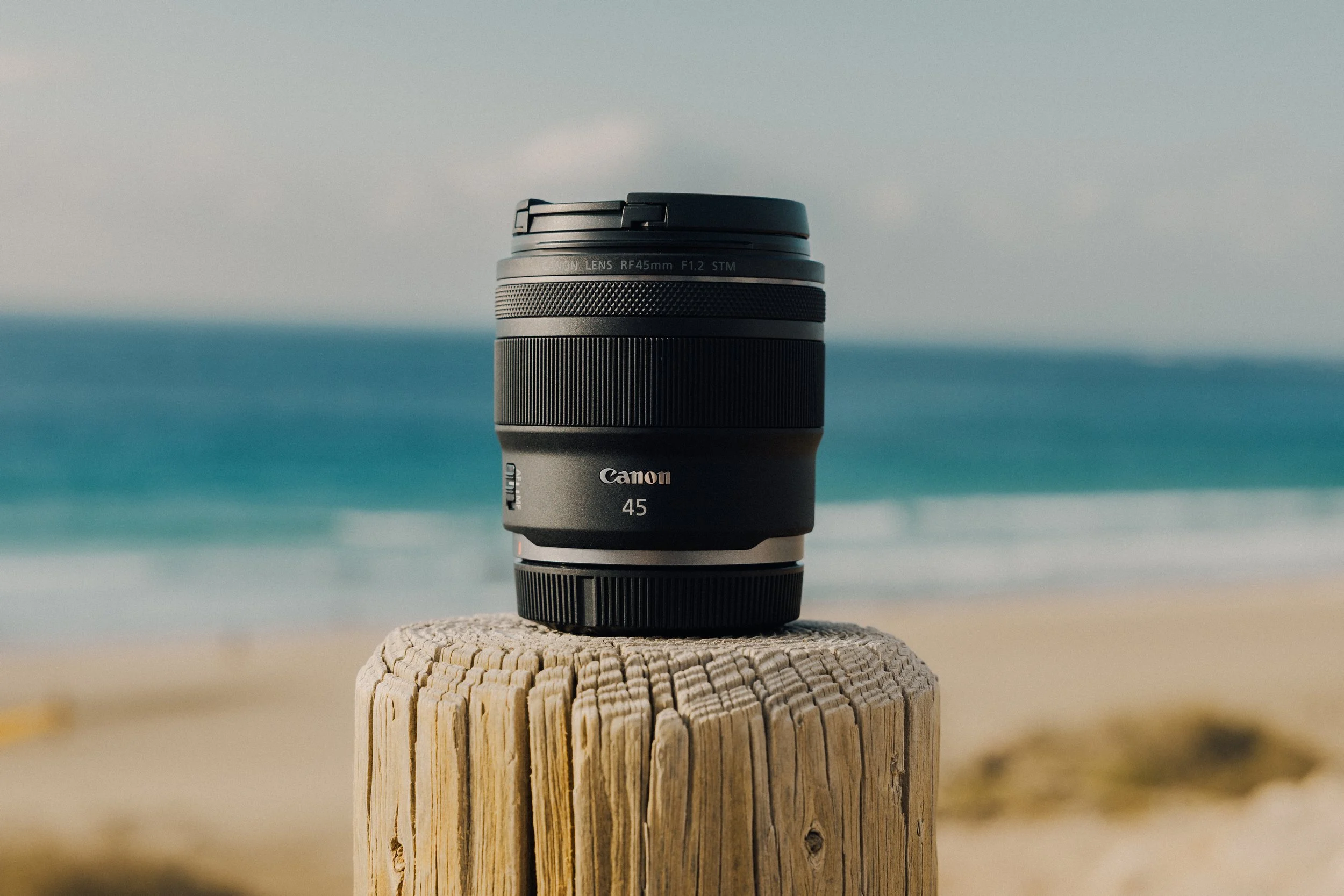
An autofocus f/1.2 prime at a relatively affordable price sounds almost too good to be true. Traditionally, lenses this fast have been large, heavy, and extremely expensive, sitting firmly in the premium category reserved for lenses adorned with Canon's red ring. So when Canon announced the RF 45mm f/1.2, I went in expecting significant compromises.
After using this lens extensively, I can confidently say this: it isn't perfect, but it's one of the most interesting, useful, and genuinely fun fast primes Canon has released in years.
I purchased this lens with my own money, and all thoughts and opinions expressed are my own. I've also put together a video review over on my YouTube channel, which you can check out here if you prefer to watch rather than read.
Focal Length & Real-World Use
I’ve spent a lot of time shooting with both 50mm and 40mm prime lenses, two focal lengths I absolutely love for their versatility, especially when it comes to portraits. A 45mm prime, though, is a bit of an odd one. It’s not a focal length I’ve had much experience with, particularly in a fast prime, so I went in with a few reservations. In practice, however, it works extremely well, and I was genuinely surprised by how natural it feels.
Sitting neatly between 35mm and 50mm, 45mm offers a very natural perspective while still being flexible enough to tell a story. For portraits especially, it strikes a really nice balance: tight enough for flattering framing, but wide enough to include a sense of place and environment. I’ll go into more detail on its strengths as a portrait lens later, but even for general use, I found 45mm to be far more versatile than I initially expected.




It’s particularly good at capturing day-to-day life. Compared to something like 35mm, the slightly tighter field of view adds a bit more depth and subject separation, which works beautifully for travel photography and even landscapes. I’d still say it’s marginally less versatile than 35mm overall, but 45mm covers an impressive range of shooting scenarios and rarely feels restrictive.
I found it especially well suited to:
Environmental portraits
Weddings and events
Travel and documentary-style shooting
Street photography
Portraits
The super-fast f/1.2 aperture combined with the versatile field of view makes this lens an excellent choice for portraits. Shot wide open and straight out of camera, the RF 45mm f/1.2 has a slightly dreamy, almost vintage, lower-contrast look. For portraits, that’s often a positive, it smooths skin detail and produces a softer, more flattering rendering without feeling overly artificial and clinical like a lot of modern prime lenses.
That f/1.2 aperture also means even wider environmental portraits, which can sometimes feel a little flat on slower lenses, suddenly have real depth and subject separation. Backgrounds fall away nicely, and there’s an overall “wow” factor that really helps portraits pop.





In use, 45mm turned out to be every bit as capable for portraits as 50mm. In fact, I think this is the closest you can get to the look of the RF 50mm f/1.2 L for the money. The 45mm doesn’t quite match the 50mm’s exceptional rendering, particularly in very busy scenes, but with simpler backgrounds the results can look pretty similar, especially in terms of overall character and depth… at a fraction of the price.

Canon RF 45mm 1.2 At F1.2

Canon RF 50mm 1.2 At F1.2
It does fall behind in outright sharpness, which I’ll cover later, but in terms of rendering and portrait-friendly character, it punches well above its weight.
Bokeh
Bokeh is where you start to see some of the compromises with the RF 45mm f/1.2. Overall background blur is strong and subject separation is excellent, but the quality of that blur isn’t always perfectly smooth. In busier, more challenging scenes, bokeh edges can look a little harsher than I’d typically expect from an f/1.2 lens, and detailed textures like foliage or rocks, can take on a slightly nervous character rather than being fully smoothed out.

45mm 1.2 at F1.2

45mm 1.2 at F1.2
When compared directly to Canon’s 50mm f/1.2 side by side comparison from earlier, the difference is noticeable, though it’s also entirely expected given the significant price gap between the two lenses.
That said, for the money, the bokeh performance is absolutely acceptable and doesn’t detract from the overall images. It’s not flawless, but it rarely gets in the way of making strong photographs.

RF 45mm 1.2 at F1.2
Sharpness
Central sharpness is more than good enough for portrait work, in my experience. At f/1.2 the lens is absolutely usable in the centre, although contrast is a little low, which can actually be quite flattering for smoothing out skin detail in portraits. Stopping down to f/2 brings a noticeable jump in clarity and contrast, and by f/2.8 the lens is genuinely very sharp. After shooting thousands of images with it, I’ve not had a single moment where central sharpness felt like a limiting factor, especially as someone who isn’t chasing clinical sharpness in their portrait work.
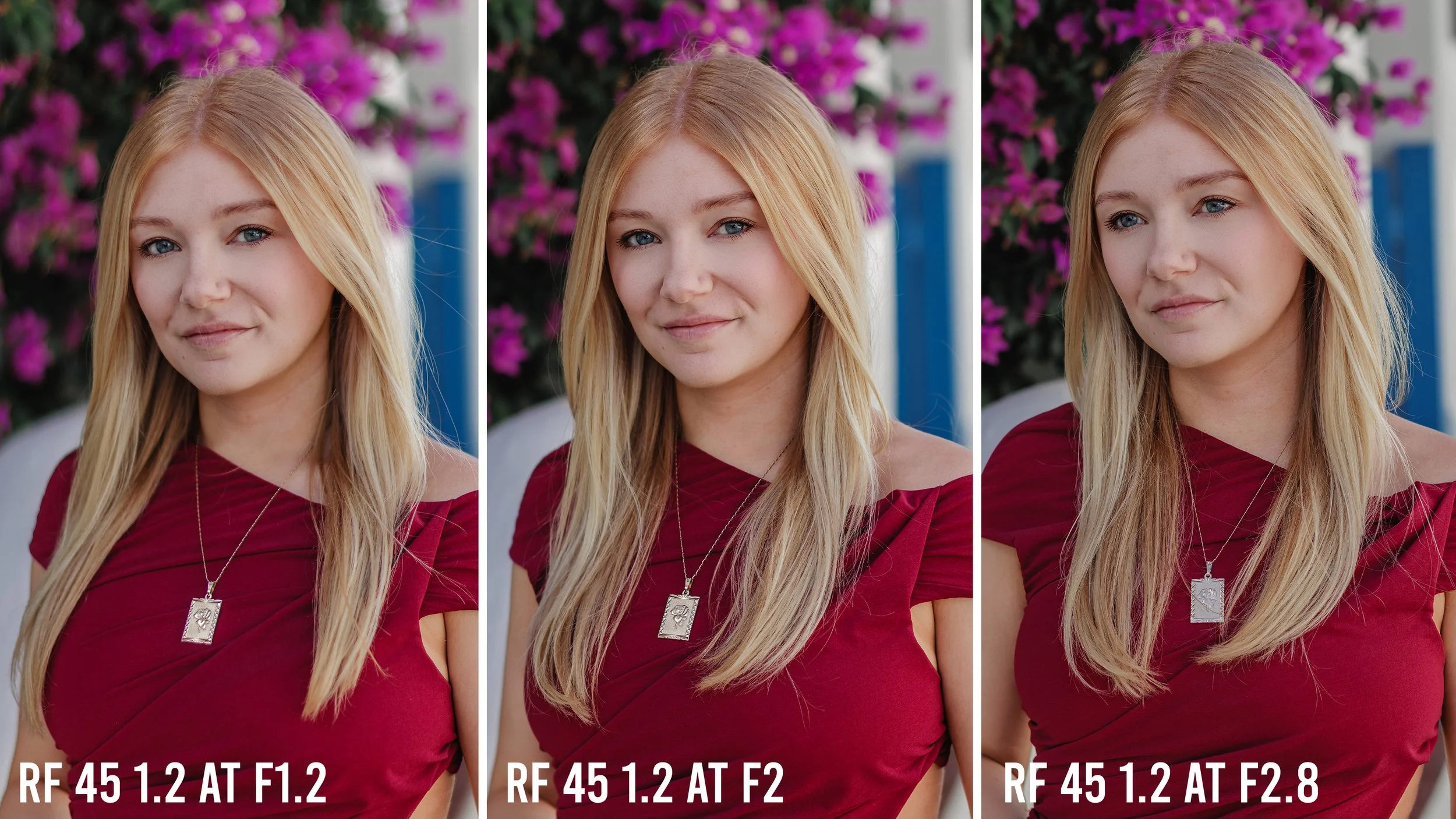
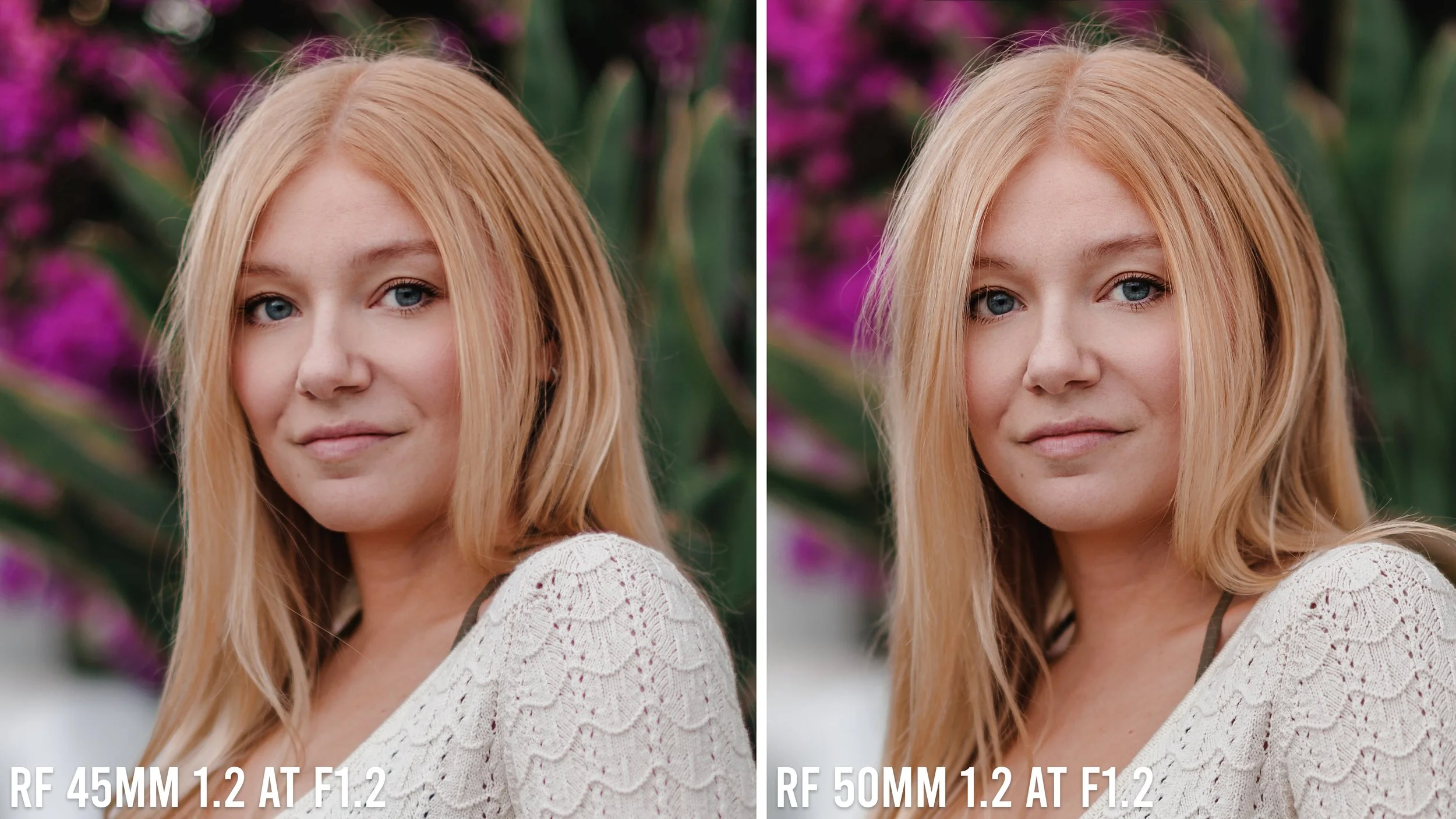
Here you can see the difference wide open at F1.2 against the amazing RF 50m 1.2L. Although the 45mm’s performance is admirable given the specs and the price, the premium L lens is the clear winner when it comes to clarity.
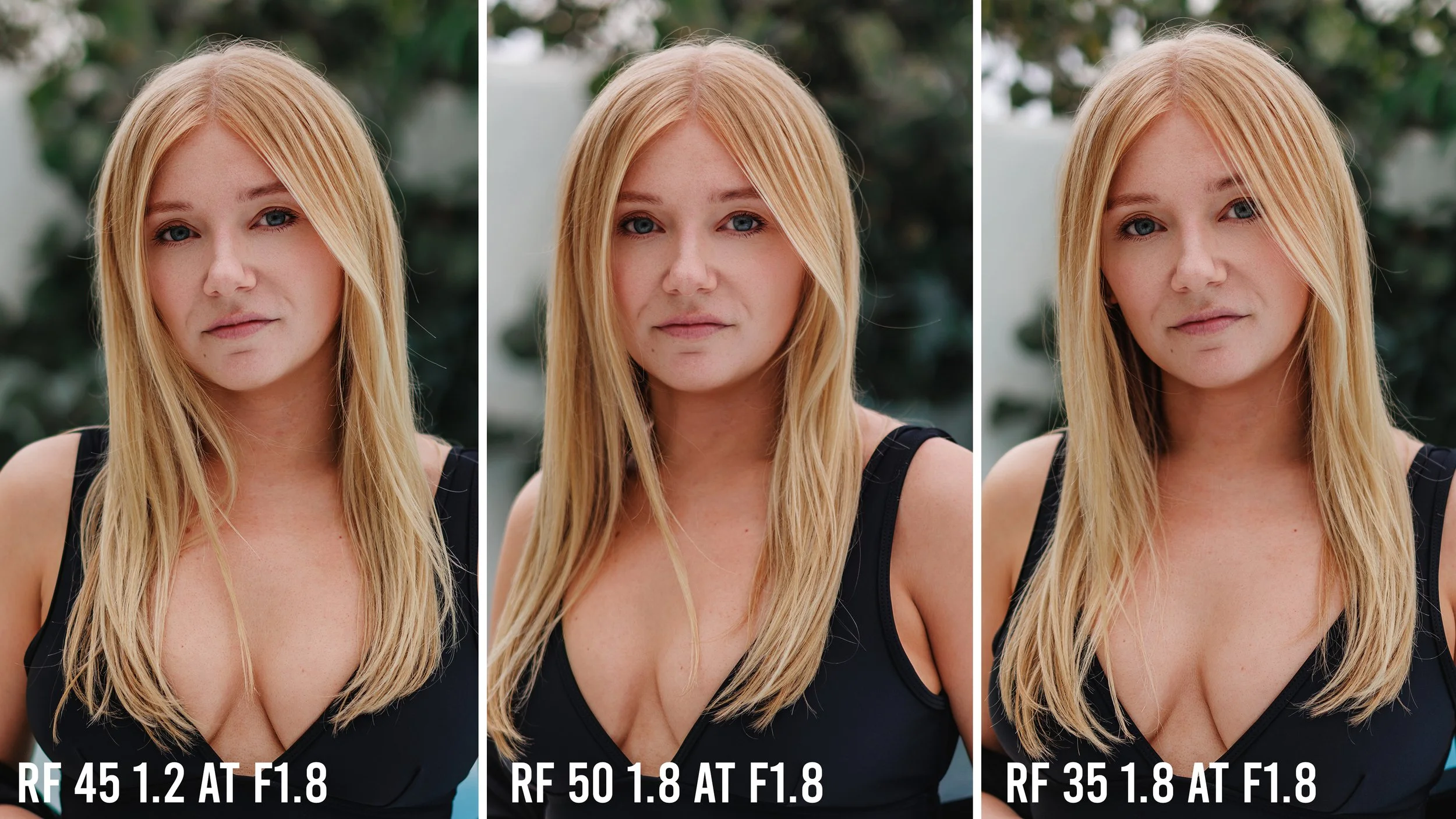
It does perform however, as good or better than most other budget RF fast primes I tested it against wide open.
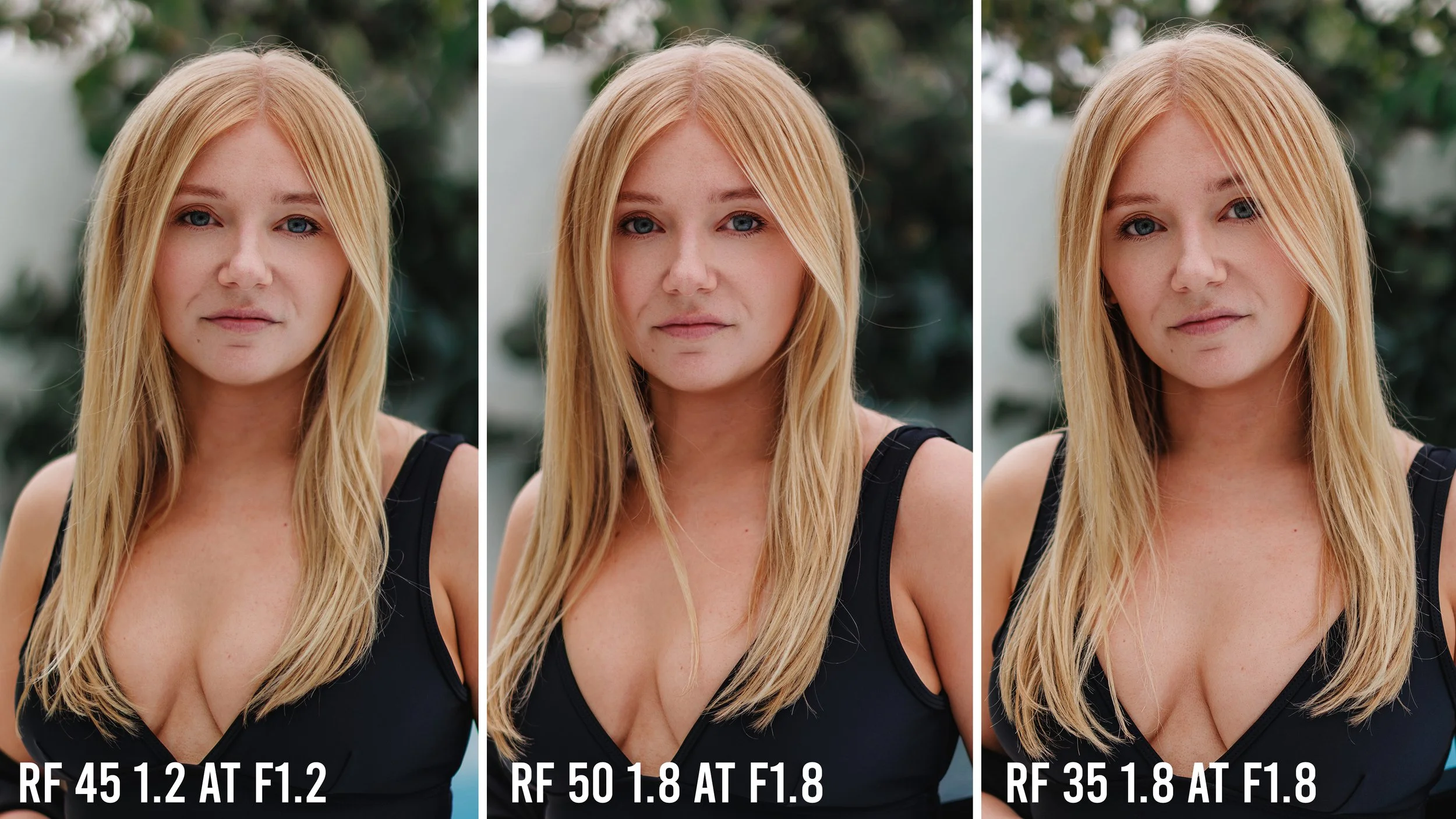
And at equal apertures, it was generally the better performing lens.
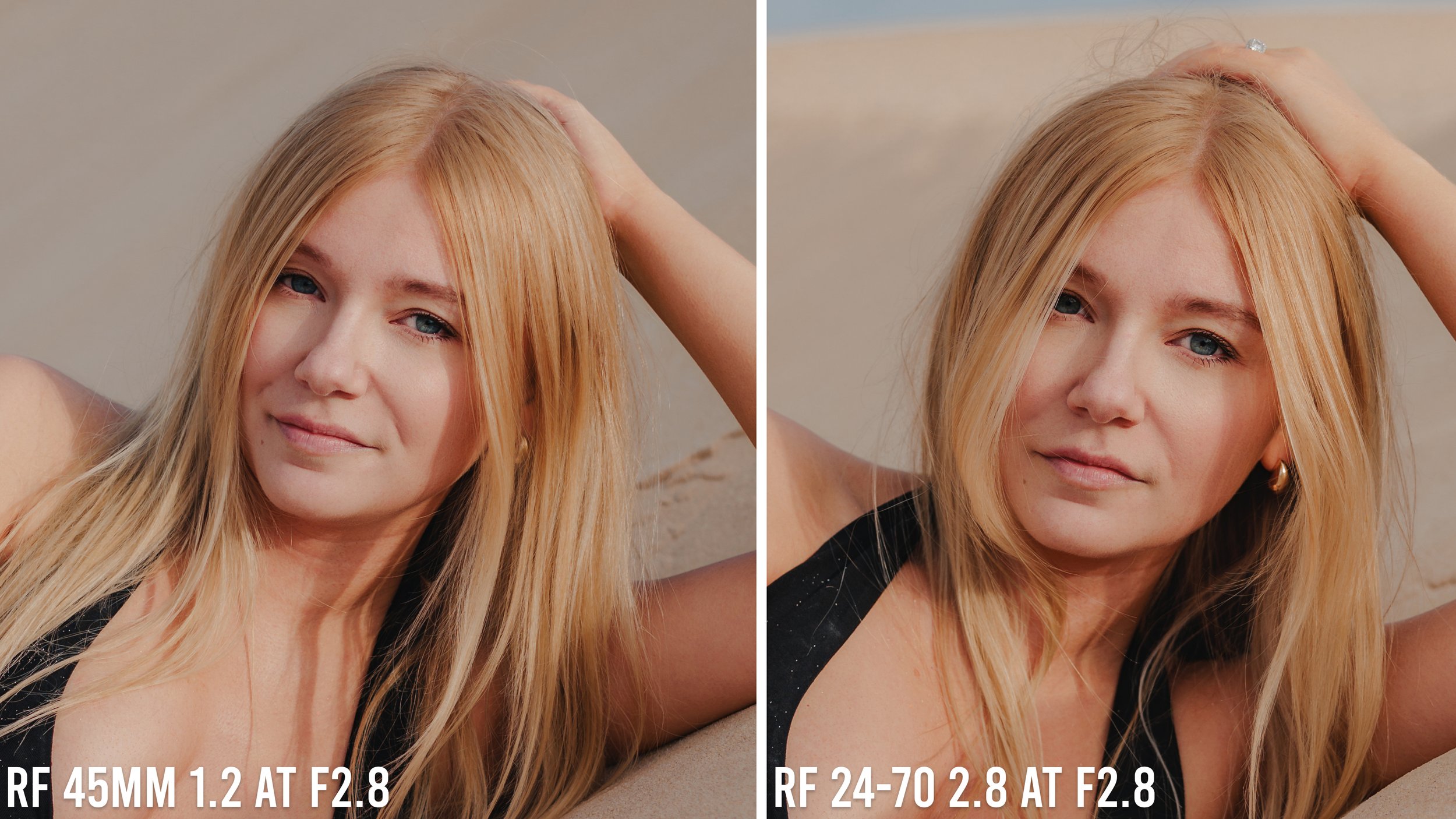
And to put it into context, here’s the 45mm at F2.8 against the amazing RF 24-70mm 2.8 at 45mm, where you can see, the performance is very similar.
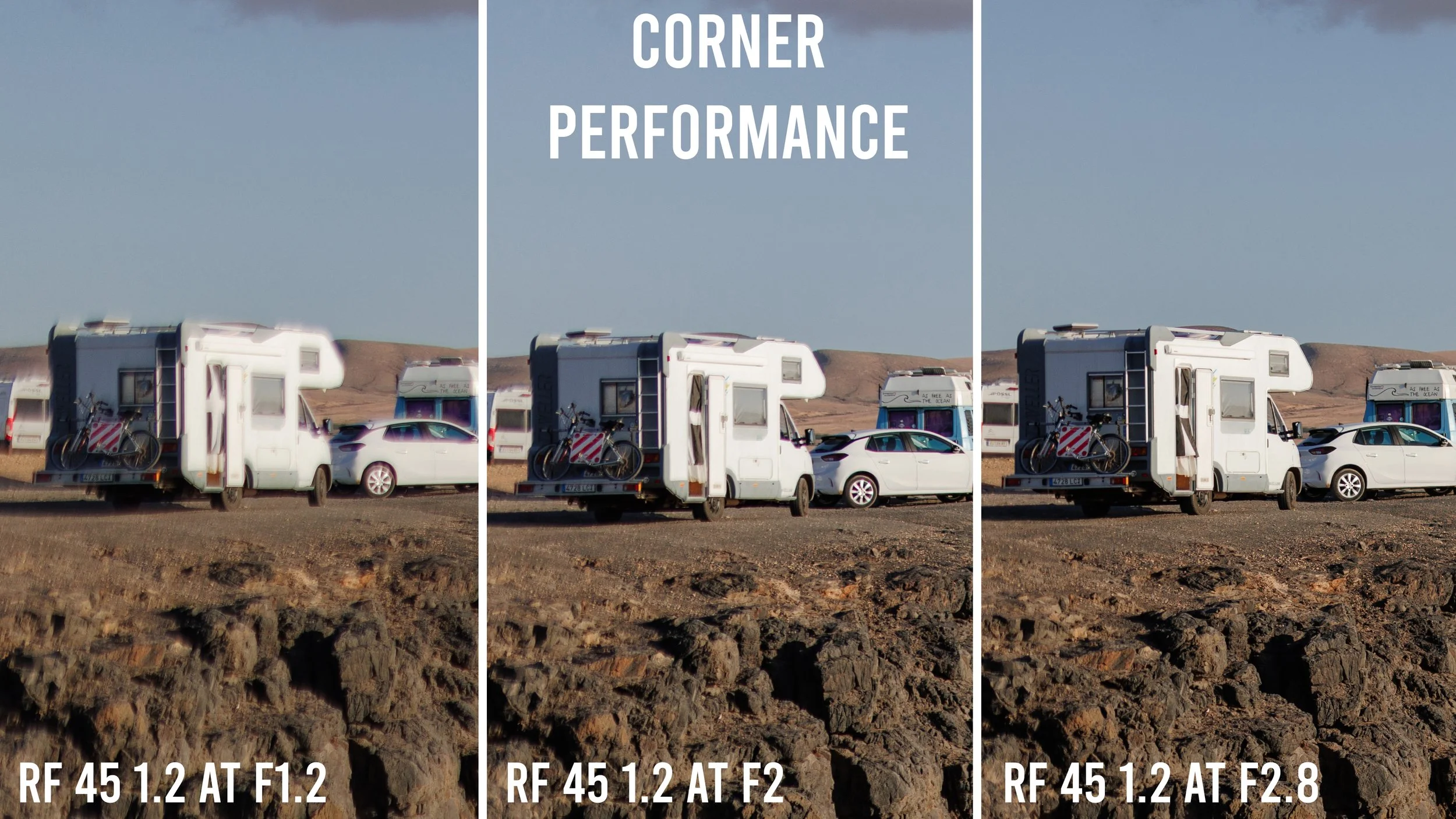
Corner sharpness is a different story wide open. At f/1.2 the extreme corners are undeniably weak, with heavy smearing that makes it clear this isn’t a lens designed for wide-open landscape shooting. The good news is that performance improves very quickly as you stop down. By f/1.8 there’s a noticeable jump in clarity, by f/2.8 the corners are clean and sharp, and by f/4 the lens performs very well across the entire frame. Once stopped down, it delivers far stronger results than you might expect given its wide-open behaviour and is actually a very good choice for shooting between F4-F8 for landscapes and heavily detailed scenes with great clarity and contrast.
Corrections
The RF 45mm f/1.2 relies fairly heavily on digital corrections, particularly when shooting wide open. With corrections disabled, there’s strong vignetting and noticeable distortion, and turning them off also results in a visible shift in overall exposure as the camera lifts the corners to compensate.

RF 45mm 1.2 With Corrections OFF
RF 45mm 1.2 With Corrections ON
As you stop the lens down, these issues become far less pronounced. By around f/2.8, vignetting and distortion are largely under control and the lens settles into a much more conventional-looking rendering. It’s worth keeping in mind that the heavier correction applied at wider apertures can significantly lift shadow areas, which may introduce a little extra noise in low-light situations.
That said, this kind of behaviour is fairly typical of very fast modern primes and isn’t something unique to this lens. In real-world use, it’s rarely an issue unless you’re deliberately pushing files in challenging lighting.
Chromatic Aberrations
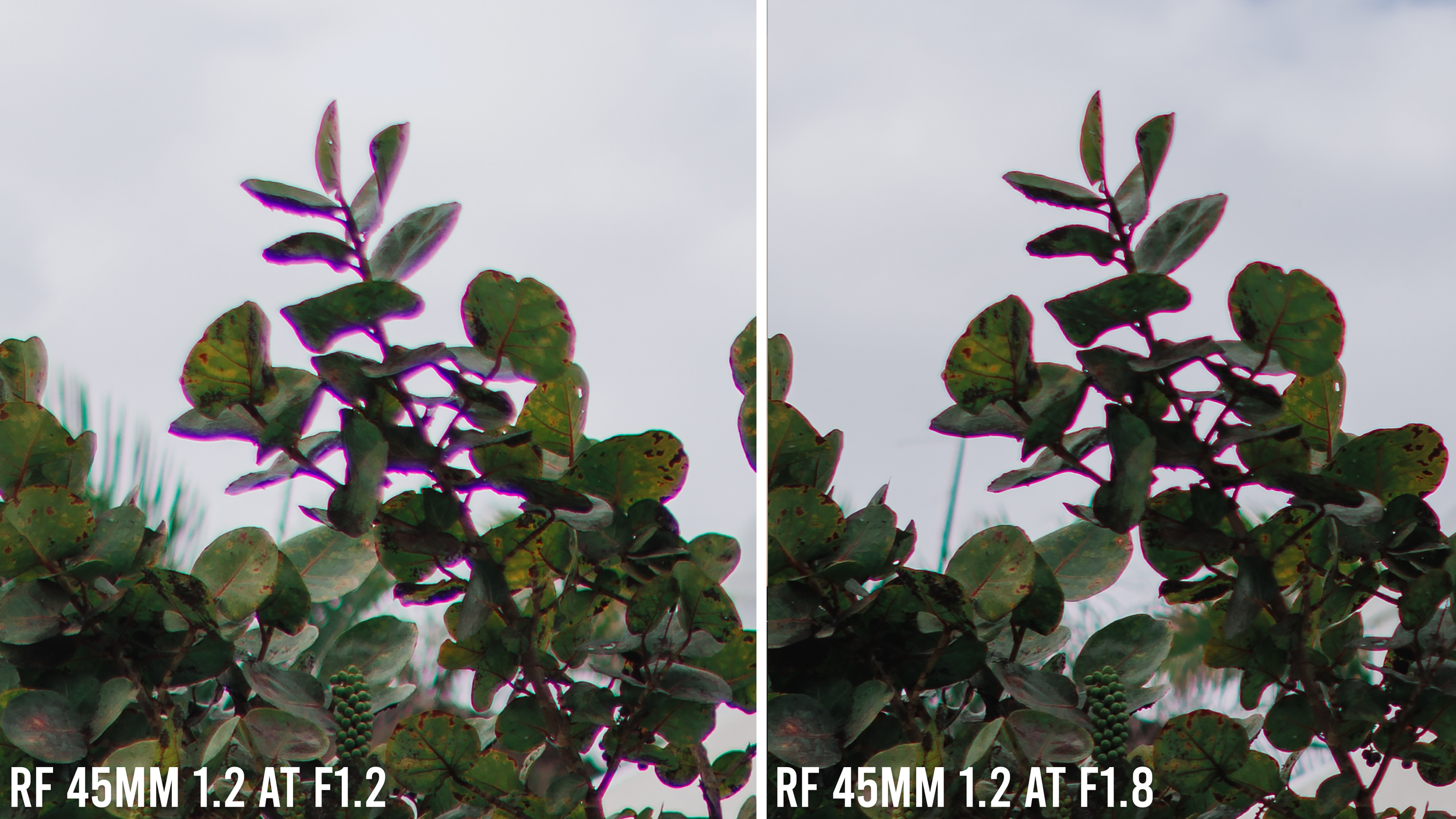
Chromatic aberration is one of the weaker areas of the RF 45mm f/1.2. Shot wide open at f/1.2, axial chromatic aberration can be quite visible, with noticeable purple fringing appearing in high-contrast situations, things like branches or fine detail against a bright sky. Stopping the lens down improves this progressively; by around f/1.8 it’s much better controlled, by f/2.8 it’s far less noticeable, and by f/4 it has effectively disappeared
Flare performance, however, was a pleasant surprise. Even when shooting directly into strong light sources, the lens holds onto contrast well and resists flare better than I expected, making it very usable for backlit portraits and sunset shooting.

Autofocus Performance
For portraits, weddings, and events, autofocus performance is very solid. I tested this lens across multiple camera bodies, including older models like the Canon RP, and in day-to-day use it proved to be consistently reliable.
Eye detection locks on quickly and confidently, even in fast-paced situations with plenty of movement and long bursts of shots. This held true even when shooting wide open at f/1.2, where depth of field is extremely shallow. In practice, it rarely missed focus, and any limitations I encountered felt far more camera-dependent than lens-related.
Overall, I’d say its autofocus performance is broadly in line with Canon’s other STM primes, such as the RF 50mm f/1.8 and RF 35mm f/1.8, but with a slight step up in speed. Autofocus noise is also very well controlled, noticeably quieter than many other budget RF primes, and even quieter than some L-series lenses, making it unobtrusive for candid shooting and quieter environments. In fact, I’d say this lens is quieter than my RF 50mm f/1.2 L.
There have been reports of focus shift with this lens, particularly on older Canon RF bodies. I haven’t experienced this with my copy, at least at typical portrait distances, though I should note that I haven’t tested it extensively on close-up charts. At closer focusing distances, it’s worth taking a moment to double-check focus using depth-of-field preview, just to be safe.

An image shot on the Canon EOS RP using the RF 45mm 1.2 at F2. No issues with sharpness here!
Build & Handling
One of the biggest strengths of this lens is its usability. Despite being an f/1.2 prime, it’s surprisingly lightweight, well balanced, and comfortable to use over long shoots. It never feels front-heavy or fatiguing, which is something I can’t say about many other lenses in this category, or any other f/1.2 prime I’ve used in the past.

The RF 45mm 1.2 on the Canon R5 Mark II
That usability carries across different camera bodies as well. On smaller cameras like the Canon RP, it makes for a really nice, compact setup that works well for everyday shooting or travel. At the same time, it also feels excellent on larger bodies like the R5 Mark II, where the balance is spot on and the combination remains comfortable even during long professional shoots.
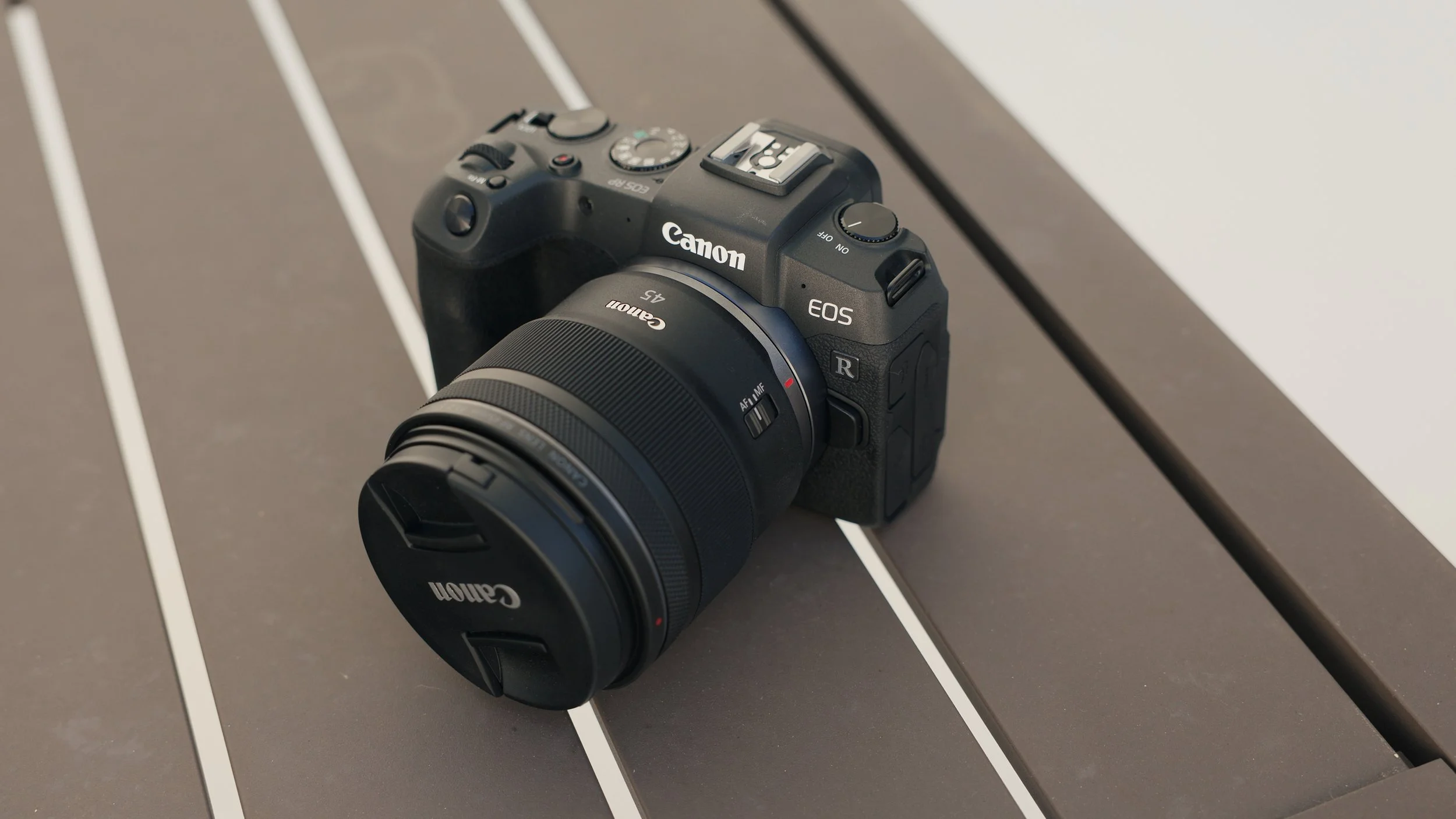
The Canon RF 45mm 1.2 on the Canon EOS RP
The design itself is very simple, with just a control ring, a focus ring, and a single AF/MF switch. There’s no weather sealing, which is a little disappointing but also not unexpected at this price point. The front element also moves in and out as the lens focuses, so it remains to be seen how this might affect things like dust ingress over time. That said, my much more expensive RF 50mm f/1.2 behaves in exactly the same way.
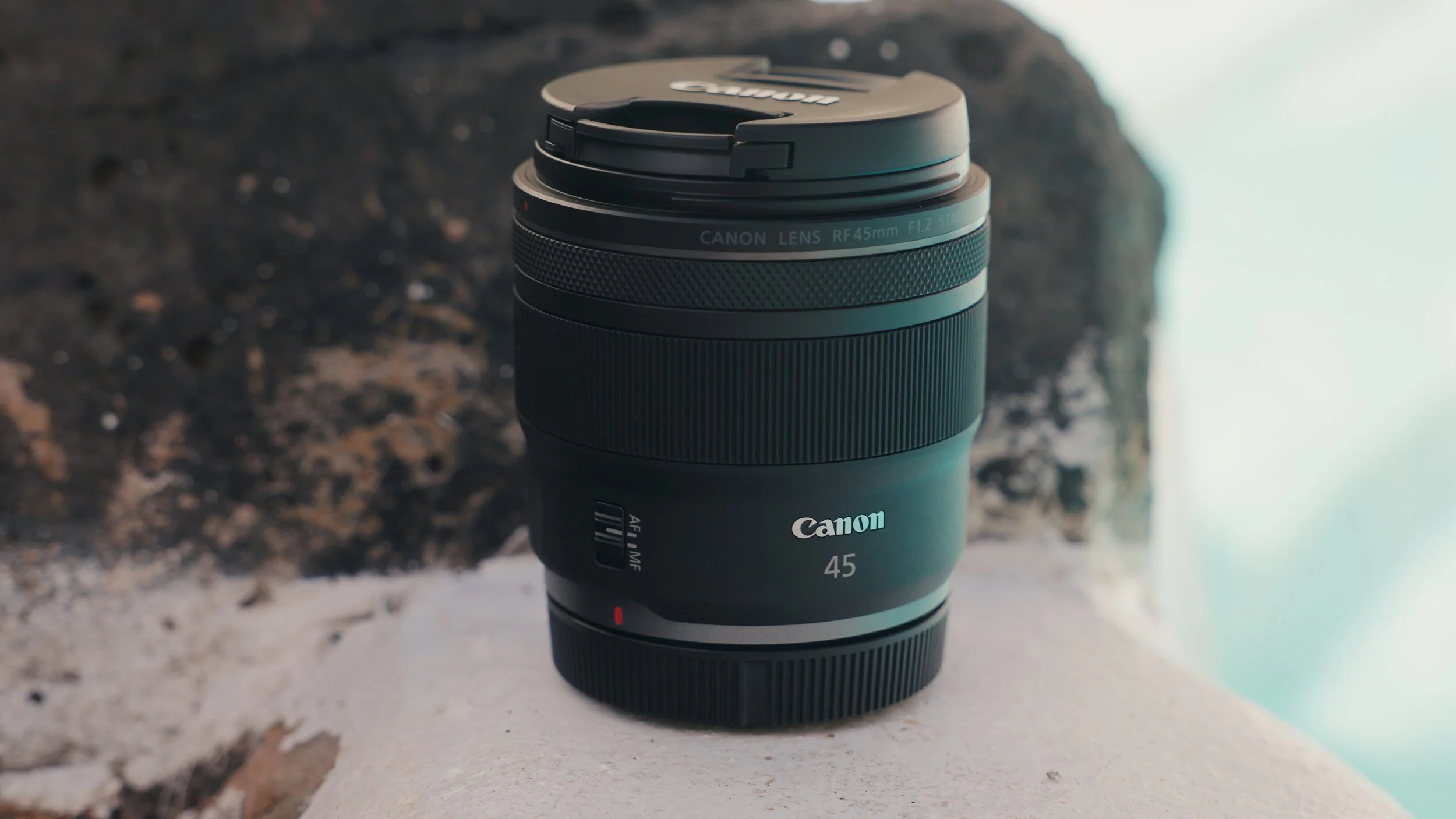
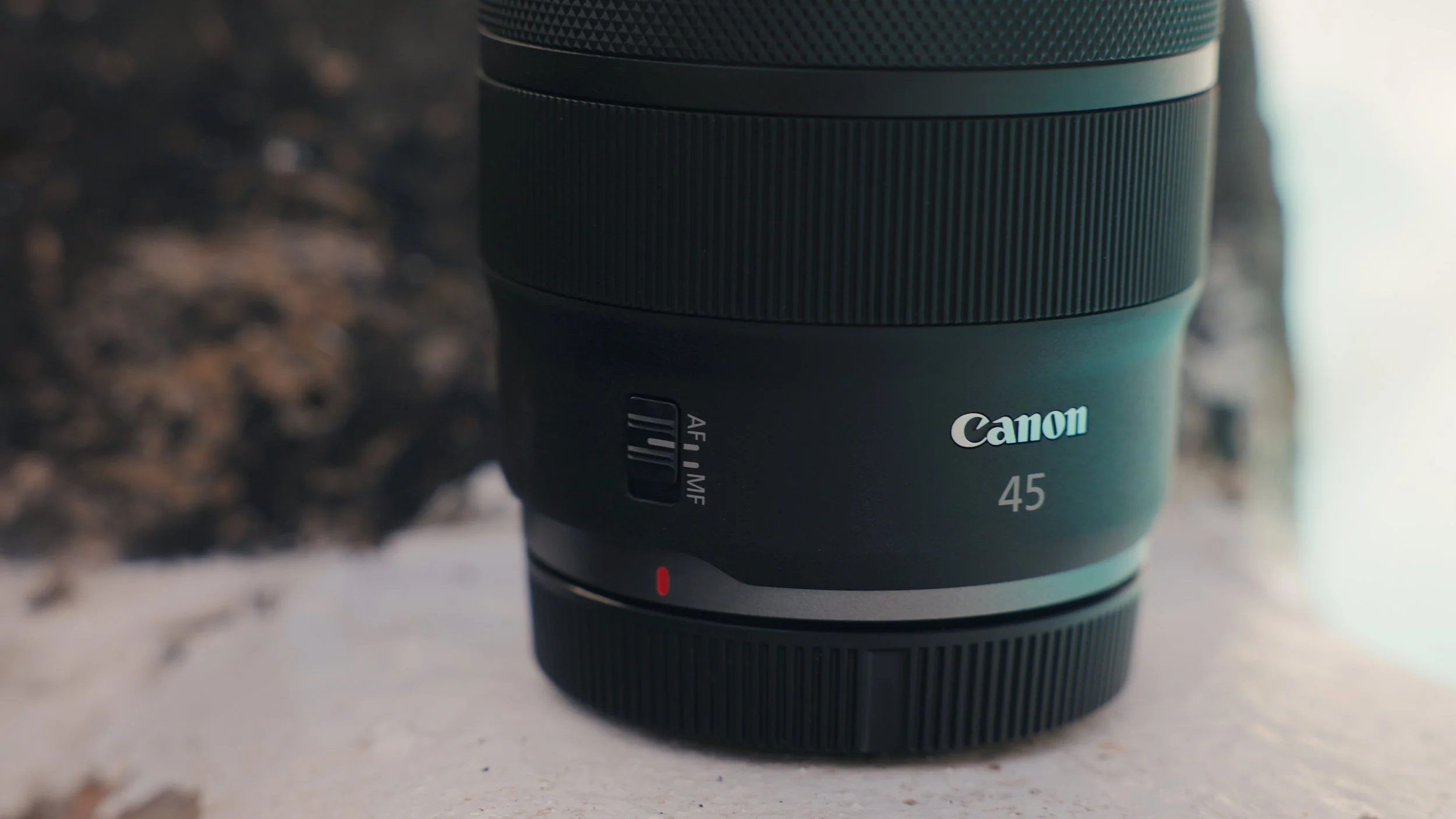
Overall, this is a lens that clearly prioritises practicality and ease of use and that’s a big part of what makes it so enjoyable to shoot with.

Pros and Cons
✅ Pros
Very accessible price for an autofocus f/1.2 prime
Excellent subject isolation and depth at wide apertures
Lightweight and well balanced for long shoots
Strong central sharpness from f/2 onwards
Reliable autofocus for portraits, weddings, and events
Surprisingly good video performance with a cinematic look
Versatile 45mm focal length for environmental portraits
❌ Cons
Heavy reliance on digital corrections
Strong vignetting and distortion wide open
Corners are very weak at f/1.2
Bokeh can appear busy in complex backgrounds
Noticeable chromatic aberration in high-contrast scenes
No weather sealing
Conclusion
I spent a long time with this lens because I wanted to be completely confident in my recommendation. At first, it genuinely felt too good to be true.
Is it optically perfect? No.
Does it compete directly with Canon’s premium f/1.2 lenses? Also no.
What it does offer, though, is something genuinely exciting: access to an autofocus f/1.2 prime that’s affordable, lightweight, versatile, and genuinely fun to use. Before this lens, a native autofocus f/1.2 option simply wasn’t available to the budget-conscious photographer… and this lens changes that.
For most photographers, I think this makes far more sense than spending thousands on a premium alternative. It delivers a distinctive look, performs well in real-world shooting, and opens up creative possibilities that were previously out of reach for many people.
On a personal level, I just really enjoyed using it, and that matters to me. I was consistently happy with the images it produced, and it’s a lens I kept reaching for rather than forcing myself to test.
I’d happily recommend this to portrait photographers looking to dip their toe into fast-aperture primes. It also makes an excellent, versatile pairing alongside a standard zoom, giving you access to shallow depth of field and creative flexibility without the usual f/1.2 price tag.
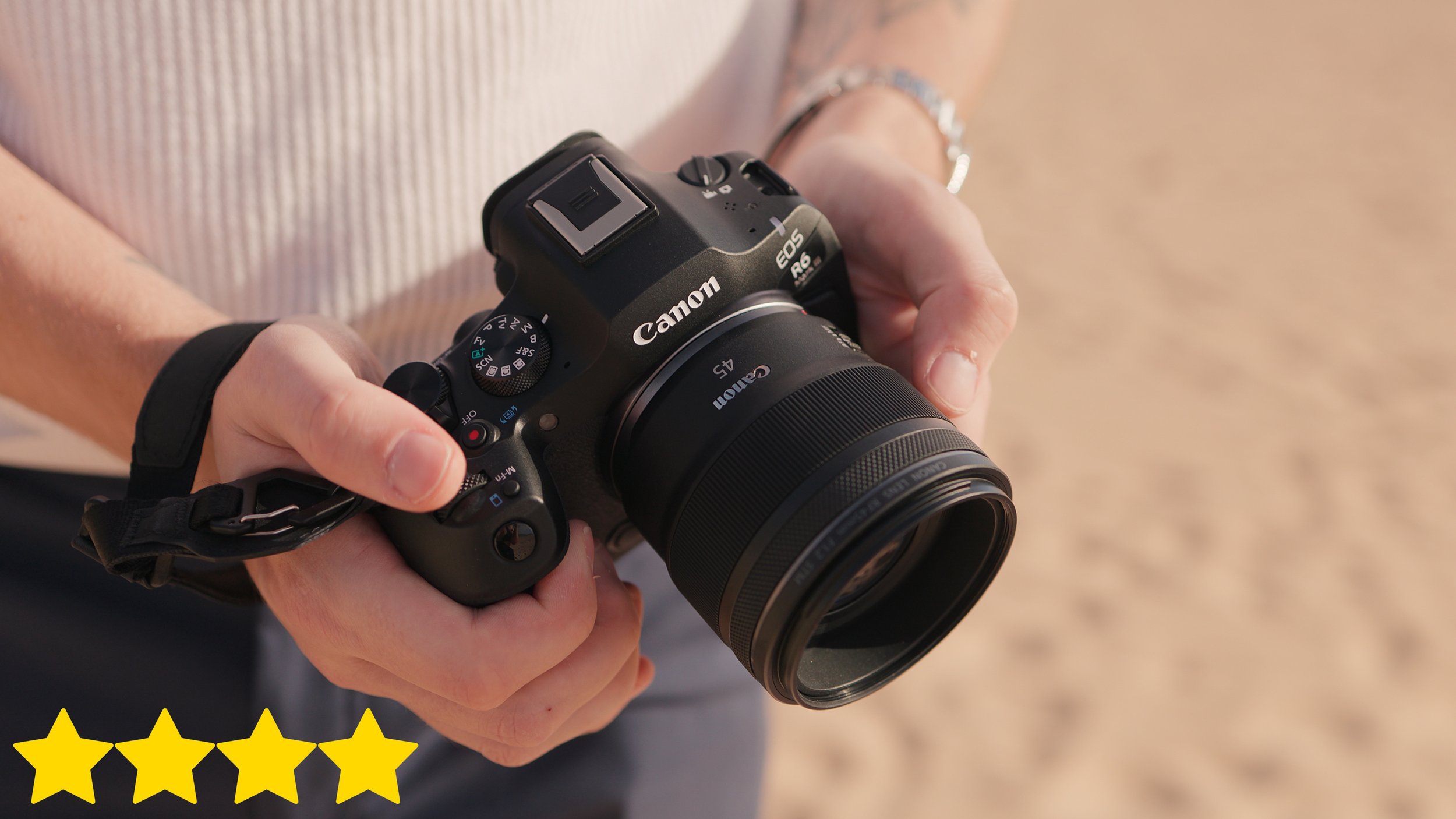
For that reason, it earns a solid 4 stars from me.
Example Images